Thursday, January 31, 2013

Foreign workforce growth slows as local hiring rises sharply

Foreign workforce growth slows as local hiring rises sharply
Photo: Reuters 
 
TODAY,
10 hours 4 min ago
 
SINGAPORE — The growth of the foreign workforce in Singapore slowed down significantly in 2012, while local employment growth rose sharply, amid tighter controls to check the inflow of foreign workers, according to the key preliminary findings of the Employment Situation 2012 report released by the Ministry of Manpower (MOM) today.

Local employment growth rose by 59,200, substantially higher than the gains of 37,900 in 2011, while the growth in foreign employment eased to 70,400 in 2012, compared with 84,800 in 2011.

MOM said with the high employment creation, unemployment remained low, despite a rise in layoffs.
For the whole of 2012, the annual average unemployment rate remained at a low of 2 per cent overall.
The rate was 3 per cent for citizens, unchanged from 2011, while the resident unemployment rate dropped to 2.8 per cent from 2.9 per cent.

Amid the tight labour market, the nominal income from work of Singaporeans continued to rise, though at a slower pace in 2012, reflecting the weaker economic conditions.

The median monthly income from work, including employer CPF contributions, of full-time employed citizens rose over the year by 5.8 per cent to S$3,248 in 2012, down from the growth of 6.3 per cent in 2011.

Balanced by lower inflation, the real median income growth was 1.2 per cent in 2012, compared with 1 per cent in 2011. CHANNEL NEWSASIA
 

SMEs face challenge of slower growth in workforce

SMEs face challenge of slower growth in workforce
Photo: Reuters 
 
By Wong Wei Han, TODAY
17 hours 50 min ago
 
SINGAPORE — With slower workforce growth in the long term and challenges to improve productivity in the near term, concerns are being raised that some small and medium enterprises (SMEs) here may struggle or even fail as they face mounting manpower issues.

Singapore’s workforce is set to grow by 1 to 2 per cent in this decade and 1 per cent between 2020 and 2030, according to the White Paper on population released on Tuesday, and these numbers may create a challenging environment for SMEs, said Mr Victor Tay, Chief Operating Officer of the Singapore Business Federation (SBF).

“A workforce growth of 1 to 2 per cent going forward is substantially lower than the 3.3 per cent we saw in previous decades. Without a sufficient inflow of foreign workers to fill their manpower needs, some SMEs will have difficulties to grow. We may also see the impact cascading to customer experience, leading to a deterioration in service quality.”

And the worst-case scenario is that more SMEs will simply go out of business. “Already we had over 1 per cent of survey respondents — mostly SMEs — closing down last year due specifically to manpower constraints, according to our National Business Survey 2012,” said Mr Tay.

SMEs are the cornerstone of the Singapore economy: They employ seven out of every 10 workers, and contribute over 50 per cent of the national Gross Domestic Product (GDP), according to SPRING Singapore.

The constraints they face are unlikely to go away, with the Government set to continue limiting the import of foreign labour.

And with two out of three Singaporeans expected to hold a PMET (professionals, managers, executives or technicians) job by 2030 — compared to about half today — businesses may find it even harder to address their non-PMET manpower needs.

“The next two to three years will be a critical period. As the supply of foreign workers continues to narrow, we believe that the number of SMEs closing down will increase if businesses can’t improve their productivity or restructure to move up the value chain,” said Mr Tay.

Similarly concerned about the workforce challenges, the Singapore Chinese Chamber of Commerce & Industry (SCCCI) yesterday said it hopes the Government will devise appropriate policies to ensure that “our local enterprises, especially the SMEs which form the core of the business community, could also sustain their growth over the long term.”

“We believe that the business community would still require a good number of foreign workers to fill positions for skills that Singaporean do not have and which are at the lower rung of the workforce … and allow Singaporeans to concentrate on upgrading themselves and move into higher-skilled occupations,” said the SCCCI.

Meanwhile, the Government is pushing for improved productivity to address the slowing workforce growth. It says that if productivity grows by 2 to 3 per cent in this decade, GDP could grow by 3 to 5 per cent. The White Paper described that productivity growth target as “ambitious”.

But limiting the inflow of foreign workers does not automatically mean productivity will improve, argued Mr Wei Chan, a council member of the Association of Small and Medium Enterprises. He is also Business Development Director of Pine Garden’s Cake, a micro-SME comprising two heartland shops with over 20 employees.

“The Government likes to equate low productivity to the usage of low cost foreign labour. But the truth is, despite the introduction of productivity schemes and the tightening of manpower policies, productivity has not improved at all, and the whole business community is crying foul that we don’t have enough people.”

Mr Chan also owns Baguette, a franchise business that sells Vietnamese sandwiches. In the past year, manpower concerns have forced two franchisees to give up.

And as the inflow of foreign labour is set to keep shrinking, Mr Chan is warning that micro-SMEs like his are heading towards a “perfect storm”.

“What do we have now? A higher levy to hire foreign workers, high rental and manpower costs, a reduction of foreign worker quotas and artificially inflated salaries. These factors are going to leave micro SMEs no room to move forward.”
 

Govt seeking ‘careful balance’ between workforce growth & infrastructure constraints: DPM Teo

Govt seeking ‘careful balance’ between workforce growth & infrastructure constraints: DPM Teo
DPM Teo Chee Hean at the symbolic Groundbreaking Ceremony for the Home Team Tactical Centre located at Mandai Road on Jan 31, 2013. Photo: Ernest Chua. 
 
3 hours 28 min ago
 
SINGAPORE — The Government is seeking a “careful balance” between the need to supplement the Republic’s ageing workforce with foreigners and infrastructure constraints, said Deputy Prime Minister Teo Chee Hean today.

The recently-released Population White Paper “focuses on the interests and benefits of Singaporeans”, he stressed.

Commenting on Singaporeans’ response to the White Paper, Mr Teo observed that many were “focused on the headline number” of a projected 6.9 million people by 2030.

“That’s quite understandable, people are concerned about job competition … and also whether there are infrastructure constraints,” he said.

Some commentators had also questioned the value of planning for 2030 while Singaporeans faced infrastructural problems presently, especially in housing and transport.

Mr Teo responded: “While the Government looks to the future, we are also placing a lot of priority to addressing these immediate concerns.”

He cited public transport as an example, where more buses are being put into service and one new segment of MRT line would be opening every year over the next five years.

Mr Teo also painted two scenarios for Singapore’s future demographics.

The first was that if immigration stopped, “our workforce will shrink, businesses will find it harder to get workers, investments may dry up … new good jobs may be difficult to come by, especially for younger Singaporeans”.

The other scenario was that if Singapore’s workforce continued to grow at present rates, “the total population will grow well beyond the numbers that we are talking about in the White Paper” and would “put very serious pressure on Singapore well beyond our constraints”.

Neither scenario “would actually produce for us desirable outcomes”, hence the Government has to strike a “careful balance” between the two extremes, said the DPM.

Instead of relying on workforce growth to boost the economy, the focus has shifted to “high productivity growth”. This proposal put forth by the White Paper thus represented a “major shift in our economic gears”, he said.

“The White Paper focuses on the interest and benefits of Singaporeans,” he said, and it ultimately aims to “bring better lives to Singaporeans, good jobs and good wages”.

Mr Teo was speaking to reporters today on the sidelines of a groundbreaking event for the new Home Team Tactical Centre in Mandai.

Developed jointly by the Singapore Police Force and Singapore Civil Defense Force, the 29-hectare complex will house training facilities for both forces when it is completed in 2018.

These facilities include a replica ship, industrial complexes and collapsed buildings meant to simulate real-life scenarios.
 

Fire leads to evacuation at condo work site

Straits Times, Published on Jan 31, 2013

Thick black smoke coming out from the top floors of the Concourse Skyline condo construction site on Beach Road yesterday morning. A site supervisor said the incident started during a routine task. No injuries were reported. -- PHOTO: COURTESY OF KOH BENG LIANG
A CONDOMINIUM construction site near the city centre was evacuated yesterday after a fire broke out.

A member of the public alerted the Singapore Civil Defence Force (SCDF) and the police to the blaze at the Concourse Skyline worksite on Beach Road at 9.43am.

No injuries were reported, but cafe patrons at The Concourse next door reported seeing thick black smoke and flames near the top floors.

Several police cars, a fire engine and ambulance were sent to the site, but the fire had already been extinguished by workers when they arrived.

According to an on-site supervisor, who did not wish to be named, it started during a routine task, when polyfoam was being cut on the 40th floor, and sparks ignited the material.

Staff were evacuated from the site as a precautionary measure, but work had resumed by 10.20am.

The incident was captured on closed-circuit television and no damage was caused to the building, which has already reached its maximum 40-floor height.

Police and SCDF personnel left the scene by 10.50am, following precautionary checks.

A spokesman for developer Hong Fok Corporation, in explaining the incident, said that the member of the public called the SCDF "wrongly" and that the smoke was caused by "normal working activities".

New hotel a welcome harbour for seafarers

Straits Times, Published on Jan 31, 2013

NTUC secretary-general Lim Swee Say (third from right) at the official opening of Seacare Hotel yesterday together with (from left) Singapore Organisation of Seamen president Mohamed Idris Mohamed Ibrahim, the organisation's general secretary Kam Soon Huat, the International Transport Workers' Federation acting general secretary Stephen Cotton, Seacare Cooperative chairman Leow Ching Chuan, and labour MP Seng Han Thong. The hotel offers subsidised stays to seafarers from eligible companies. -- ST PHOTO: LAU FOOK KONG

THE Seacare Hotel, the first in the country to be run by a labour cooperative, will provide a welcome harbour for seafarers stopping over in Singapore.

Officially opened yesterday after a soft launch last September, the 103-room hotel on Chin Swee Road will offer subsidised stays to seafarers from eligible companies.

But seamen are not its only intended clientele.

The Seacare Hotel also aims to attract business travellers, with facilities such as a business centre, gym, sauna, gaming room with jackpot machines, and a rooftop wine bar.

The 16-storey hotel is run by the hospitality arm of Seacare Cooperative, which was set up by the National Trades Union Congress (NTUC) and maritime trade union Singapore Organisation of Seamen (SOS).

Intended as "a contribution towards the international maritime labour movement", the hotel idea was conceived in 2008 "to make affordable hotel accommodation more readily available to seamen" while they are here, SOS president Mohamed Idris Mohamed Ibrahim said yesterday.

Singapore is a major hub for companies carrying out crew changes on merchant ships. When these occur, seafarers are put up in accommodation paid for by employers - but this is not always easy to find. Shipping firms unionised under the SOS are encouraged to contribute to the Seacare Sailors' Home Scheme, which helps provide affordable accommodation.

As the Seacare Hotel is part of this scheme, 1,200 gift certificates for a free one-night stay are being given to participating companies. Thereafter, seafarers from those firms are still entitled to a 15 per cent discount on rooms. Seafarers from unionised firms that are not part of the scheme will get 10 per cent off, as will NTUC members.

NTUC secretary-general Lim Swee Say, guest of honour at yesterday's official opening, said the hotel exemplifies the need for organisations to both "do well" - that is, to be profitable - and "do good" by benefiting workers.

The Seacare Hotel is meant to be profitable, but it was not set up just "to make money", said Mr Lim. "We set up Seacare Hotel because we wanted to provide better benefits for seafarers."

Police beat us, say bus strike 'leaders'

Video clips recording their allegations are making the rounds on Internet

Straits Times, Published on Jan 31, 2013
By Jermyn Chow


He Jun Ling (above), who is seen as the chief architect of the strike, claims he was punched in the stomach while in custody and heard fellow bus driver Liu Xiangying being slapped by officers. -- ST PHOTO: CAROLINE CHIA


Chinese nationals He Jun Ling and Liu Xiangying are seen complaining that they were slapped, punched and threatened while in custody following the Nov 26 protest over pay and living conditions.

The clips, which last for between 60 and 100 seconds, were recorded by independent film-maker Lynn Lee and posted on her website on Monday.

Both men are charged with instigating the walkout by SMRT bus drivers from China - Singapore's first strike in 26 years.

He, who is seen as the chief architect of the illegal protest, claimed he was punched in the stomach while in the police lock-up. The 32-year-old also alleged that he heard officers slapping Liu, 33.

Meanwhile, Liu accused an officer of threatening and hitting him when he denied knowing He.

The police released a statement on Tuesday describing the claims as "serious allegations". They said the former bus drivers should file a police report so their accusations could be investigated.

"Their lawyers can also raise this matter in court when the case against them is heard," the statement added.

He and Liu are among four men accused of leading the 171 drivers from China who took part in the strike on Nov 26 and the 88 who stayed away again the following day. The protest was triggered by unhappiness over living conditions and the pay gap between them and their Malaysian colleagues.

The four are out on bail and have until Feb 1 to decide whether to accept the prosecution's offer of reduced charges if they plead guilty.

Last week, He, Liu and Gao Yue Qiang, 32, were sacked by SMRT, which said they had breached their contracts by failing to turn up for work. The fourth alleged ringleader, 39-year-old Wang Xianjie, had already left the firm after his contract expired earlier in the month.

The quartet have filed a litany of complaints against SMRT on topics including pay and living conditions. They have also made a police report saying they were tailed by unidentified people after being released on bail.

Immigration pluses and minuses

Straits Times, Published on Jan 31, 2013


Crowds at Bugis Junction on Tuesday. Singapore's population is expected to rise to around six million by 2020 and seven million by 2030. -- ST PHOTO: CAROLINE CHIA
THERE has been much recent discussion on the topic of population in Singapore. The population white paper released on Tuesday deals at length with the issue. Overall population is expected to rise to around six million by 2020 and seven million by 2030.

The paper established a key theme, which is to build a more sustainable population that better matches population needs with economic growth.

But is there such an optimal population figure, given the dynamic and ever-changing global economy? The question should focus on how Singapore gains from immigration and how these gains can be fairly distributed so as to reduce the income disparity.

Economic literature supports the economic benefits of immigration - it brings about higher quantity and quality of labour that drives growth in economies.

A recent study by Professor Matthew Sanderson, a sociologist at Kansas State University, has shown that immigration brings about a "Matthew Effect" (a reference to the Biblical Book Of Matthew's "the rich get richer"), where wealthy countries gain more in terms of real GDP per capita due to immigration.

Professor Sanderson's 230-country study, published in 2012, includes Singapore, which it said benefited from immigration.

Among the findings:
First, there is a positive correlation between international migration and the level of economic development - that is, countries with international migration tend to also have higher economic development levels.

Secondly, this broad correlation is qualified by income levels in the countries studied, whereby the higher income the country, the more the country is expected to gain from an open immigration policy.

Thirdly, the study also suggests a disproportional effect from immigration, with income gains of US$29.49 (S$36.34) per person in high-income countries, but only US$1.99 per person in middle-income countries and just US$0.58 per person in low-income countries.

Thus, economic growth may be propelled by accepting a larger foreign population growth. In fact, Singapore needs it since productivity changes require developmental time. But some empirical studies have shown that the poor or lowly skilled were worse off.

This is pertinent to the discussion in Singapore.

A paper last year by Singapore's National Population and Talent Division recognises the economic need for foreign immigrants, including in occupations that Singaporeans may be less willing to take up. Due to its ageing population, Singapore requires another 115,000 foreign health-care and domestic workers in the next few years.

To continually satisfy infrastructure and housing needs in Singapore, a projected increment of 30,000 construction workers is required for the next few years.

These are needs of society and, thus, it is important not to fully turn off the immigration tap.

However, an important study put forth by Professor Pia Orrenius and Professor Madeline Zavodny, former economists at the federal banks of Dallas and Atlanta respectively, showed that immigration has differing effects on citizens with different skill levels.

In their model, professionals' wages have risen due to immigration, while those of manual workers have fallen.

The study found that one key reason is due to differences in the "degree of substitutability" between immigrants and locals across skill levels.

Low-skilled local workers are more easily replaced or substituted by foreign workers, as it's easier for foreign workers to pick up the skills needed and cheaper for them to be trained; also, foreign workers have a tendency to accept below-market wages. This forces low-skilled residents to accept falling wages.

On the other hand, the influx of immigrants creates new investments leading to high-paying jobs.
Local skilled workers who are able to upgrade easily benefit from taking on these new jobs higher on the value chain, thus increasing their earnings.

In Singapore, this has unfortunately become the case. According to the Ministry of Manpower's surveys, the median basic wage of cleaners fell from $1,015 in 1999 to $900 in 2011. This is in comparison to professionals' wages, which increased from $3,350 to $4,380 in the same period.

To be sure, immigration was probably not the only factor explaining these wage trends.

However, too loose an immigration policy, allowing an influx of less-skilled workers, might have been one factor that worsened income inequality. This is an important issue that needs thorough study.

The writer, an education officer, has a Master of Economics from Singapore Management University's postgraduate economic research programme.
 

Why right population matters

Straits Times, Published on Jan 31, 2013
 
IT WOULD be unfortunate if the scenario of 6.9 million people by 2030 becomes a catchword for perceptions of an overcrowded island. Such a number is an essential one to work out so the implications can be weighed by all and planning can proceed. In looking ahead, the Population White Paper usefully fleshes out what might transpire if nothing is done and what is possible if the nation seizes the opportunity to act.

Given the public mood, it is essential for the Government to carry the ground, as it did during an earlier era of transformational change. Matching population growth precisely with physical improvements is never easy, and any lag in the latter might stoke passions revolving around immigration issues, the cost of living, and public transport service lapses.

Any disquiet must be addressed sooner rather than later and sceptics must be won over, lest political impediments become constraints on what Singapore might otherwise be able to achieve as a country. One way of doing so might be to encourage people to look beyond present-day concerns, pressing as they are, to an envisioned future for their children and themselves.

Today's newborns will be in their late teens and preparing to enter the workforce by 2030, when two-thirds of Singaporeans are expected to hold professional, managerial, executive and technical jobs. The threat to the economic and social well-being of families in the future would lie in an ageing society, a diminishing pool of Singaporeans and a shortage of skilled labour to keep the nation running.

In repopulating the country, the White Paper rightly visualises a strong Singaporean core, with a periphery of skilled permanent residents and another layer of foreign workers for social, health-care, construction, retail and food sectors. While it is wise to make Singaporean birth rates and labour productivity main planks of the nation's strategy, it cannot afford to ignore the helping hand of immigration.

Understandably, there is considerable public concern over increasing competition for jobs, housing, access to public transport and places in education. Some also wonder whether the social compact can be preserved with more immigrants. The Government has ramped up the supply of public housing, and plans to double the train network by 2030. Much more work lies ahead and the authorities will be judged by their ability to plan and implement ambitious schemes smoothly and efficaciously.

Importantly, the public has to support future-ready programmes and offer views and ideas, both at Our Singapore Conversation sessions and elsewhere, on this crucial goal of keeping Singapore vibrant.

Migrants' billions put aid in the shade


Money transfers from workers abroad to family back home have tripled in a decade and are three times larger than global aid budgets
From The Guardian 
By Wednesday 30 January 2013 18.35 GMT

workers-in-Dubai
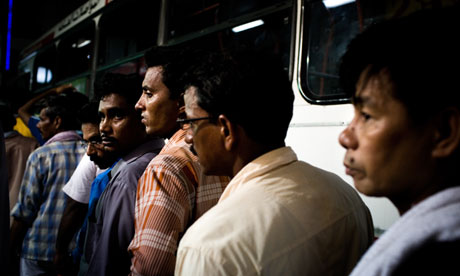
Migrant workers wait for a bus to take them home after a day's work in Dubai. Remittances by people working abroad topped $530bn last year. Photograph: Ghaith Abdul Ahad
 
For decades it was a largely unnoticed feature of the global economy, a blip of a statistic that hinted at the tendency of expatriates to send a little pocket money back to families in their home countries.

But now, the flow of migrant money around the world has shot up to record levels as more people than ever cross borders to live and work abroad. It's known as remittance money, and in 2012 it topped $530bn (£335bn), according to the latest World Bank figures.

The amount has tripled in a decade and is now more than three times larger than total global aid budgets, sparking serious debate as to whether migration and the money it generates is a realistic alternative to just doling out aid. If remittances at the level recorded by the World Bank were a single economy, it would be the 22nd largest in the world, bigger than Iran or Argentina.

And according to World Bank officials, the real figure could be much larger. Dilip Ratha, of the migration and remittances unit at the World Bank, said that billions more in remittances were not being recorded as many people were continuing to bypass the banks and big money transfer companies that are relied on for data.

A number of countries, including the Philippines, Bangladesh and Senegal, have set up initiatives or even government ministries to manage cash sent from overseas.

The Rwandan government, which has seen much of its aid cut last year over allegations it was supporting rebels in neighbouring Democratic Republic of the Congo, has called on Rwandans living abroad to contribute to a new "solidarity fund", in an attempt to lessen its reliance on aid.

"It's something that's been going on since time immemorial," said Michael Clemens, a US economist who studies migration and remittances at the Centre for Global Development, a thinktank based in Washington. "But now, for example, with Skype you can see the school uniform bought with the money you sent in the morning."

But there is a dark side. Attention is turning to the companies scrambling to capture as much as they can from these multibillion-dollar flows. In some cases, more than 20% of money migrants send is lost to transfer fees.

India and China were the biggest beneficiaries of remittances last year, each receiving more than $60bn, followed by the Philippines ($24bn), Mexico ($24bn), and Nigeria ($21bn). Egypt, the sixth largest, has seen the value of remittances surge from less than $9bn in 2008 to nearly $18bn last year.
For some smaller economies, remittances can account for huge proportions of national income.

Tajikistan and Liberia receive the equivalent of 47% and 31% of their respective GDPs from workers abroad.

For dozens of developing countries the money migrants sent home is worth more than the aid they receive. For some – including Bangladesh, Guatemala, Mexico and Senegal – remittances from workers abroad are larger than aid and foreign investment combined.

Globally, there are more than 214 million migrants; if they lived in one country, it would be the fifth most populous, trailing only China, India, America and Indonesia.

Migrants in the UK sent nearly $4bn in remittances to India in 2011, according to World Bank estimates, compared with the $450m in UK aid it received that year. Bangladesh received $740m in remittances from the UK in 2011; its aid amounted to $370m.

"People feel an obligation. I've never heard someone with an origin in another country not feel a sense of obligation, or a sense of connection, or wanting to make a contribution," said Britain's shadow minister for international development, Rushanara Ali.

Ali, who was born in Bangladesh, believes the UK government should look at how remittances could complement aid spending. "There will always be pressures on budgets," she said. "The time is ripe for coming up with new ideas on how diaspora communities can make a contribution."

The remittance phenomenon has been largely recession proof, although there was a dip in 2008/09. But the biggest complaint from migrants is the cut taken by banks and wire transfer firms. The G8 wants the global cost of sending money lowered to an average of 5% by 2014, giving billions more to migrants' families. At present, the average fee is about 9%, meaning an average of $18 for every $200 sent, but in some parts it tops 20%.

Civil society groups warn the rising interest in remittances and the impact they could have on global poverty should not gloss over the challenges migrants face nor the many reported cases of abuse and exploitation.

The flipside of parents working thousands of miles from home is children growing up as virtual orphans. Some villages in the Philippines, for example, are almost devoid of parents, with grandparents shouldering the childcare.

Meanwhile, the execution this month of Sri Lankan domestic worker Rizana Nafeek in Saudi Arabia highlighted the often brutal conditions faced by migrant workers there.

Saudi Arabia has one of the highest migrant populations in the world, with remittances sent from the kingdom topping $28bn in 2011 – the third largest amount across the globe.

"Attention to the rights of migrants is especially important at this time of global economic and financial distress," said the UN secretary general, Ban Ki-moon, last month.

"As budgets tighten, we are seeing austerity measures that discriminate against migrant workers, xenophobic rhetoric that encourages violence against irregular migrants, and proposed immigration laws that allow the police to profile migrants with impunity."

In September the UN will hold a high-level meeting alongside the general assembly to discuss migration and development, from increasing labour mobility and remittances to protecting human rights.

An international convention on migrant workers' rights does exist, but only a few dozen governments have ratified it – primarily developing countries where migrant workers come from. The US has not signed it, nor have EU or Gulf countries.

• This article was amended on 31 January 2013. The original referred to an attempt to lesson, rather than lessen, reliance on aid. This has been corrected.

URL: http://www.guardian.co.uk/global-development/2013/jan/30/migrants-billions-overshadow-aid

Balancing a Tight Labour Market in 2013

From the MOM blog
By Acting Manpower Minister, Tan Chuan-Jin

A month into 2013 and economists over the world have started to revise their projections for the year ahead. Most reports paint an uncertain global economic outlook. The International Labour Organization (ILO) warned of worsening unemployment. In Singapore, economists and analysts surveyed by the Monetary Authority of Singapore (MAS) expect GDP growth to be 2.7% (median forecast) in 2013 while MTI forecasts growth of 1-3%.

What will the impact be on Singaporeans?
The latest seasonally adjusted unemployment rate of Singapore citizens is estimated at 2.9%p in Dec 2012, down from 3.0% a quarter ago. This is a good sign, as it means that most jobseekers are able to find jobs. While these are very encouraging figures, I am mindful that for the unemployed, some of whom I am in correspondence with, it is emotionally trying to remain out of job. However, we should not expect such low levels of unemployment rate to be the norm. As restructuring picks up pace in 2013 and the years ahead, we may see more unemployment as a natural outcome of jobseekers moving across jobs and industries. MOM continues to work closely with WDA and the CDCs, putting in more resources to assist workers affected to find new employment and minimise the pain of transition.
We will continue to pay attention to the quality of jobs. Real median income[1] of full-time employed Singaporeans rose over the year by 1.2%[2] in 2012, after taking into account inflation[3], compared with 1.0% in 2011. If we exclude imputed rentals on owner-occupied accommodation (which do not involve actual expenditure) in adjusting for inflation, the real median income growth was 2.1%. At the same time, we will need to do more to uplift income not just at the middle, but at the bottom as well. We have taken measures such as the Inclusive Growth Programme, the Workfare Income Supplement and the Workfare Training Scheme and various other transfers and subsidies (e.g. housing, education, medical) to help our low-wage workers in a sustainable way.
Local employment in 2012 saw a significant growth at 59,200p, compared to 37,900 in 2011. This reflects multiple factors at play, such as the tightening of foreign worker controls, the Special Employment Credit which encourages hiring of older workers, re-employment legislation which just kicked in last year, and tripartite efforts to encourage flexi-work arrangements. I am personally heartened as this shows that employers are now more motivated to hire locals, including those who have been economically inactive, such as back-to-work women. The numbers speak for themselves – the employment rate of women aged 25-54 is up (from 73.0% to 74.0%) and so is the employment rate for older residents aged 55-64 (from 61.2% to 64.0%). These are pools of manpower which astute employers can tap on with the forward-looking HR practices or job redesign. I hope more employers follow suit.
On the foreign manpower front, the inflow of foreign workers has slightly eased compared to the growth in 2011. The demand for foreign workers in the construction sector is still high, as we ramp up major public infrastructural works; Construction makes up 26% (31% excluding foreign domestic workers) of all foreign workers here. If we exclude construction and foreign domestic workers, foreign employment growth has slowed substantially to 32,200p in 2012, around half the 60,200 in 2011. 
But if we look at the total pool of Employment Pass (EP) holders, who hold the higher-skilled jobs, that group had in fact declined by 1,600 in 2012. This is the first time the EP numbers had fallen since the recovery from the economic downturn in 2003[4]. This is likely in part due to the tighter EP framework from Jan 2012. We also saw an increase in S Pass numbers to 142,400p over the year, compared to 113,900 in 2011. While some are workers who were downgraded from EP to S pass, the overall growth in S pass numbers is cause for concern, and therefore we are reviewing the S Pass framework to ensure it continues to remain to our restructuring and productivity efforts.
Our policies to moderate foreign worker inflows have yielded some results but we will need to continue to slow the growth – thus, we continue to tread a fine balance here. We cannot overdo it lest we tip over balance and lead to a vicious downward cycle which will eventually affect locals. The tightening will continue to be targeted and calibrated. For all employers, the reality is that they will have to get used to operating in an environment less reliant on workforce growth, and where more emphasis is placed on productivity-driven growth, and thus leading to sustainable real wage gains for Singaporeans.
Today, while there is a good spread of vacancies across both PMET and non-PMET jobs, about a quarter of vacancies required only primary education or below[5]. These will only become harder to fill over time as the education profile of Singaporeans improves. It is not easy but businesses will need to think about how they can adjust their business model to reduce their demand for this level of workers, and instead offer fewer but higher-skilled jobs. As detailed in the Population White Paper, while the growth of the Singaporean workforce slows, more will go into PMET jobs. These are jobs that will be more highly-skilled and knowledge-based. Therefore, we will need fewer but better jobs. I understand the concerns of businesses today, especially as they face global uncertainties, but the changes to our citizen demographics are also inevitable. Businesses must rethink and restructure their businesses, together with a mindset change from employees and even consumers.
As we look ahead to 2013 and beyond, we will continue to keep our sights on maintaining a tight labour market with good job opportunities for Singaporeans, keep unemployment at a low and manageable level and help Singaporeans achieve their aspirations.
Here’s wishing everyone a Happy New Year of the Snake ahead! 


Acting Manpower Minister
Tan Chuan-Jin

Bosses fear further curbs on foreign manpower

They could cripple struggling firms even after dropping expansion plans
Straits Times, Published on Jan 31, 2013 
By Aaron Low Assistant Money Editor
 
Although employers expressed concerns over the curbs on foreign workers, business groups said the White Paper was balanced. -- ST FILE PHOTO

BOSSES fear the White Paper on population could lead to more curbs on foreign manpower and hurt many struggling businesses.
Many companies are already scrapping expansion plans but new restrictions could cripple existing firms, they said.

The White Paper released on Tuesday projects that the workforce will expand at 1 per cent to 2 per cent a year, from now until 2020. Growth will drop to 1 per cent a year from 2020 to 2030.

Based on this, the workforce could grow by about 70,000 a year, down 30 per cent from the 100,000 or so last year, said Bank of America Merrill Lynch economist Chua Hak Bin.

"This implies that curbs are on the way, maybe as early as this Budget," he said.

Kenko Wellness spa chain founder Jimi Tan said he has stopped looking for sites to expand his business and is open to cutting down an outlet or two if rules get tighter.

"We just don't have enough staff. What to do?" he said.

Mr Andrew Kwan, managing director of Italian food chain Pastamania, said further curbs could inflict a lot of pain on small firms.

"Tough manpower policies are not new and have been around for two years. Firms are trying to adjust but if the policies come too fast and are too harsh, a lot of small firms will be affected," he said.

Despite worries over possible further curbs, business groups said the White Paper was balanced.

The Singapore Chinese Chamber of Commerce and Industry (SCCCI) said it supported the Government's objective of generating sustainable growth, but urged it to craft "appropriate policies" to help local firms grow over the long term.

"While we agree that the foreign worker population should not grow to inordinate proportions, we believe that the business community would still require a good number of foreign workers to fill positions for skills that Singaporeans do not have and which are at the lower rung of the workforce," said the SCCCI.

Singapore Business Federation chief operating officer Victor Tay said businesses and individuals have to weigh the trade-offs - slow growth or rising population.

"With slower economic growth, worse business performance, workers' increments and bonuses will be correspondingly smaller. Is that what we all want? We have to come to a compromise," he said.
The tight manpower curbs have pushed firms like precision engineering firm Riso Seiki out of Singapore.

Managing director S.T. Lim moved the manufacturing plant to Batam in 2011, leaving just a team of five here to handle sales and marketing.

The Batam plant is run by 20 staff members, mostly Indonesians, at a fraction of the costs encountered here.

"I saw the tighter rules coming a long time ago. So I moved. And now, I'm better off."

***

Background story
FOREIGN WORKERS NEEDED
While we agree that the foreign worker population should not grow to inordinate proportions, we believe that the business community would still require a good number of foreign workers to fill positions for skills that Singaporeans do not have and which are at the lower rung of the workforce.
- The Singapore Chinese Chamber of Commerce and Industry (SCCCI)

SLOWER GROWTH, LOWER PAY
With slower economic growth, worse business performance, workers' increments and bonuses will be correspondingly smaller. Is that what we all want? We have to come to a compromise
- Singapore Business Federation chief operating officer Victor Tay
 

WHITE PAPER ON POPULATION: REACTIONS - Coping with a rise in numbers: S'poreans' fears

Home prices, competition for jobs, overcrowding among top worries
Straits Times, Published on Jan 31, 2013
 
Of the 100 people aged 15 to 73 interviewed by The Straits Times on the streets, exactly half rejected the idea of Singapore having 6.9 million people, while another 35 were unsure. Only 15 said it was a good idea. -- ST PHOTO: CAROLINE CHIA
MANY Singaporeans reacted with surprise - or alarm - at the 6.9 million population projected for 2030, with several wondering whether the country can cope with the 30 per cent increase.

Although the swell is 17 years away, they are worried about several issues that they say they are already facing now.

These include competition for jobs, cost of living, home prices and congestion, according to street interviews by The Straits Times yesterday, one day after the Government released its Population White Paper.

Of the 100 people aged 15 to 73, exactly half rejected the idea of Singapore having 6.9 million people, while another 35 were unsure. Only 15 said it was a good idea.

To help boost the population, more foreigners will be let in and their numbers are expected to grow from 1.49 million - as of June last year - to around 2.3 million to 2.5 million by 2030, according to the White Paper.

This raised concerns about whether homes will be affordable.

Even though enough land has been set aside to build 700,000 new Housing Board homes by 2030, one-third of those interviewed worry that prices will be high as a result of the influx of foreigners.

They wanted the Government to keep a lid on home prices and raise the income ceiling to qualify for subsidies. Some wondered if new HDB flats would further shrink in size.

"The Government says it will build more homes. But what is the point if they are all much smaller, like the homes in Hong Kong? Our quality of living will go down," said Mr Ganeesan Packrisamy, a 50-year-old driver.

Others, especially those who expect to retire by 2030, expressed concern about health-care costs, and asked if more could be done to further cut their medical bills.

Overcrowding was another major concern, with many expressing doubt that the country's infrastructure could cope with 6.9 million people, despite the Government's pledge to plan ahead.

They feel the congestion will worsen the already crowded roads and public transport.

Said analyst Chun Hui, 23: "It is already a tight squeeze when we board trains. Will we end up having to be pushed into the train by staff, like they do in Tokyo?"

The biggest concern, however, was competition for jobs, with 41 of the 100 interviewed having misgivings on whether Singaporeans would be able to land good jobs.

Despite government assurances of maintaining a Singaporean core, some like bank consultant Ben Tan, 43, want laws to ensure employers hire Singaporeans first.

Others called for more skills upgrading, reserving jobs for the less-educated, and measures to raise wages to match inflation.

They also wonder whether foreigners would be able to integrate with Singaporeans, given their different cultural behaviours and ability to communicate in English.

Housing agent Hamidah Gaffar, 59, suggested giving foreigners more help in integration, such as free English lessons and handbooks on the Singaporean way of life.

But people like cook Goh Him Boo feel the idea of having 6.9 million people is realistic and necessary.

Said the 58-year-old: "It's better to have more people, otherwise our shopping centres will become all quiet."

Added housekeeper Shanti Dorasamy, 41: "We'll have more people to support our population and have more babies."

The White Paper on a Sustainable Population for a Dynamic Singapore is available online at http://population.sg/
 

Projected population rise raises concerns

Worries of businesses and ordinary S'poreans pull in opposite directions

Straits Times, Published on Jan 31, 2013

The trade-offs inherent in the population debate crystallised sharply yesterday in the divergent reactions Singaporeans had towards the Government White Paper released on Tuesday. -- ST PHOTO: CAROLINE CHIA
THE trade-offs inherent in the population debate crystallised sharply yesterday in the divergent reactions Singaporeans had towards the Government White Paper released on Tuesday.

While there were concerns across the board about the prospect of the population figure coming close to seven million in 20 years' time, the worries of businesses and ordinary Singaporeans pulled in opposite directions.

For employers, the issue was the possibility of further cuts to what they consider to be an already tight foreign worker quota. For the man on the street, the worry centred on what a larger population might mean in the competition for homes, jobs, health care and education.

Meanwhile, some economists began to project that contributions from the manufacturing sector here could shrink from about 25 per cent to 15 per cent.

On Tuesday, the Government unveiled the Population White Paper that set out a road map on how it plans to tackle the problems of an ageing society and low birth rate over the next two decades. The headline-grabbing scenario involved a projected population of up to 6.9 million in 2030, with 55 per cent making up the Singaporean core.

Even then, that population size only translates into more modest economic growth rates of between 2 per cent and 3 per cent, down from the 3 per cent to 5 per cent growth projected in the past.

Many have now had a day to digest the 41-page document, but different stakeholders are drawing very different conclusions.

Businesses, especially small and medium-sized firms, said they had been grappling with recent curbs on foreign workers and now fear that more cuts could come as soon as next month.

The Singapore Chinese Chamber of Commerce and Industry said: "We agree that Singaporeans must remain the fulcrum... However, a dynamic economy, which is our ultimate goal, also requires the right mix of Singaporeans and foreign talent whose skills combine to keep the economy functioning well."

In the same vein, Singapore Business Federation chief operating officer Victor Tay warned: "With slower economic growth, worse business performance, workers' increments and bonuses will be correspondingly smaller. Is that what we all want? We have to come to a compromise."

For ordinary Singaporeans, the promise of two-thirds of future jobs being white collar or the pledge to provide a high quality of life might sound hopeful, but it also raised fears about heightened competition in the future.

Some 85 out of 100 people polled were either opposed to or unsure about the idea of the population growing by some 30 per cent from its current 5.3 million.

MPs said it would be tricky finding the right balance between workers' needs and concerns about overcrowding and competition. But they stressed that the White Paper scenario was by no means a firm target set in stone.

Holland-Bukit Timah GRC MP Liang Eng Hwa said he is still formulating his arguments for the parliamentary debate on the issue next week, but added that the key question has to be what the projections mean for Singaporeans.

"Is this better off for Singaporeans or not, to grow at this pace? And as we look to move ahead, we also need to satisfy ourselves that we are able to solve problems like the infrastructure bottlenecks."

The White Paper can be found at http://population.sg/

Former SMRT drivers allege police assault

MyPaper, republished on AsiaOne
By Victoria Barker
My Paper
Thursday, Jan 31, 2013 


SINGAPORE - Two former SMRT bus drivers who were charged with instigating an illegal strike have alleged in online videos that they had been assaulted while in police custody.

In a statement on Tuesday night, the police said they are aware of the video interviews, and that these are "serious allegations made by the two defendants".

The statement added that the former drivers should file a police report so that the claims can be investigated.

In separate videos, Chinese nationals He Junling, 32, and Liu Xiangying, 33, spoke in Mandarin about allegedly being slapped and punched by police officers during questioning.

My Paper understands that the interviews were taped by documentary film-maker Lynn Lee of Singapore-based Lianain Films.

Liu and He were among 171 drivers who took part in a strike to protest against unequal pay on Nov 26 last year. They were also among the 88 who continued to stay away from work the following day.
The pair, along with two others, are alleged to be the ringleaders of the strike.

In the statement, the police said the pair's lawyers can raise this matter in court, and that it is inappropriate for the police to comment on it as the case is before the courts.

Wednesday, January 30, 2013

Getting the right mix of 6.9 million people

Getting the right mix of 6.9 million people
Projected population size geared towards maintaining a strong Singaporean core
 
30 January 2013

SINGAPORE — The Republic could have a population of 6.5 million to 6.9 million by 2030, according to the Government’s much-anticipated population White Paper released yesterday.

This could comprise 3.6 million to 3.8 million citizens, 0.5 million to 0.6 million permanent residents and 2.3 million to 2.5 million non-residents.

By then, Singapore could also see its total workforce and economy growing more slowly, with the aim of quality growth in lieu of the higher pace of growth in the past. Two in three Singaporeans would hold a PMET (professionals, managers, executives or technicians) job, with those in non-PMET positions supporting the former in high-value economic activities.

Today, Singapore’s population is 5.31 million, comprising 3.29 million citizens, 0.53 million permanent residents and 1.49 million non-residents.

The White Paper marks the first time a comprehensive growth plan has been charted to “strike the best balance” in population policy, said Deputy Prime Minister Teo Chee Hean yesterday as he helmed a media conference with six other Cabinet Ministers.

The Government had started out with three objectives in mind — encouraging marriage and parenthood, creating good jobs and maintaining a quality living environment — before looking at the population needed to achieve them, aiming for a “fine balance” while at it, Mr Teo stressed.

Efforts to maintain a Singaporean core centre around encouraging locals to marry and start families, via measures such as the Marriage and Parenthood Package, which was enhanced last week.

But to prevent the citizen population from shrinking — a reality from 2025 at the current fertility rate of about 1.2 — between 15,000 and 25,000 new citizens will be added to the ranks each year. The number of new citizens will be reviewed based on the quality of applicants, Singapore’s birth rates and changing needs, the paper stated.

The second pillar of creating good jobs for Singaporeans is in keeping with an increasingly educated workforce, and the number of those in PMET jobs will increase to 1.25 million from the 850,000 today.

Apart from upskilling and ensuring a high labour force participation rate among citizens, foreigners will play a role in taking up lower-skilled jobs, helping to kick-start high value-added sectors and providing flexibility to business during economic upswings and downturns.

The economy needs to grow in order to support the aspirations of Singaporeans, and the Government will strive for a “sustainable and achievable” balance, said Second Minister for Trade and Industry S Iswaran. The economy will undergo transformation going forward as new sectors and opportunities — in urban solutions, perhaps — emerge on the back of Asia’s rise, he said.

Quality of life a top priority
And to ensure a quality living environment, the Government will make sure that the transport, housing, and healthcare infrastructure are in place, even as more parks and green spaces are provided.
To this end, one “key approach” is the decision to invest ahead of demand, said National Development Minister Khaw Boon Wan.

By 2030, 700,000 new homes will come onstream, adding to over 1.2 million homes here presently. Of these, 200,000 homes are already being built, he said.

New towns in Bidadari and Tengah will be built, and existing towns, such as Punggol, will expand.
Mr Khaw also mooted the option of building on Bukit Brown cemetery due to its central location.

One approach is to preserve the cemetery, but “I think we should make use of that very valuable piece of land to house more Singaporeans”, he said, citing strong demand from Singaporeans to live near the city.

More details will be released in the Land Use Plan on Thursday.

Should Singapore’s population grow to 6.9 million, its density would increase by about 18 per cent to 13,000 people per square kilometre. Mr Teo noted that this is below the density of cities such as Hong Kong, whose population density in developable areas is 22,700 per square km.

Mr Khaw said there is no intention to reach a density like Hong Kong’s as Singapore does not have a hinterland for its people to retreat to, unlike many other major global cities.

A high quality of living is a “top priority” for the Government, with former Prime Minister Lee Kuan Yew paving the way towards sustainable living and a garden city “because he knew this is the only way for us to survive”, said Mr Khaw.

“This is the only place we have and this city is our home. If it’s polluted, if it’s dirty, if it’s crowded, if it’s congested, then what kind of life will we get? So, that will always be the underpinning principle for our planning,” he said. “We’ll try to achieve that. And it’s possible, given time.”

The White Paper will be debated in Parliament next week and writing on Facebook yesterday, Prime Minister Lee Hsien Loong urged Singaporeans to read it.

“Our goal is simple: To ensure Singapore continues thriving, for the sake of our younger generation. But our population challenges are difficult and complex,” he wrote.

“It is not just the headline number which matters, but getting the right mix of citizens and PRs, creating exciting opportunities for our people, and building a city that offers a high quality of life and a nation that is the best home for all of us.”
 

Fury over 6.9 million population target for Singapore

Singaporeans’ comments blasting the government came fast and furious after news broke Tuesday of its plan to allow for an increase in the city-state’s population to 6.9 million by 2030.

Coming amid an already rising wave of anti-foreigner sentiment following the influx of immigrants in recent years, a white paper released by the National Population and Talent Division on Tuesday said that Singaporeans were expected to make up little more than half or 55 per cent of the projected population.

Foreigners, who currently make up about two out of five people living in Singapore, have been blamed for the rising cost of living, stagnation of wages and crowding in public transport.

Singaporeans took it to online platforms to give voice to their rage over the government’s population plan. A Facebook group, Say No to an Overpopulated Singapore, was started on Monday and has since gotten 658 likes.

Hundreds of comments to articles regarding the population target were also overwhelmingly negative.

In one comment, Yahoo! reader Ah Lim said, “… Singapore is just a tiny island, it can never [sustain] such a huge population. Maintain a reasonable population and everyone can live in comfort. I do not wish to squeeze like hell wherever I go.”

Another reader Seasand123 said, "I would consider the mother of all policy blunders ever made by the ruling party is their open door policy and flooding this tiny nation with millions of foreigners."

Social activist and owner of unemployment support site Transitioning.org Gilbert Goh told Yahoo! Singapore that the population expansion plans shocked him.

“It will cause a lot of social tension between foreigners and Singaporeans. When there are so many people coming in, you have to get them jobs and housing, and these two things will affect Singaporeans a lot,” Goh said.

“We have to produce about half a million to 750,000 jobs to accommodate a population of about 6.9 million,” he added.

The former National Solidarity Party (NSP) member said he will be organising a protest at Speakers’ Corner at Hong Lim Park on 16 February.

“[People I spoke to] are disappointed with the government for not hearing them out. The majority of Singaporeans don’t want this expansion. The disappointment is that after the PAP’s loss in Punggol East, the government still went ahead to introduce unpopular policies,” Goh said.

Immigration policies were one of the hotly debated topics at the Punggol East by-election in early January.

In the same vein, Singapore Democratic Party (SDP) said the intention to raise the population to 7 million is "extremely worrying".

"There are no justifiable reasons for the PAP to raise the population by such a large number in such a short span of time. The population explosion will cause further economic, social and psychological stress for the people, as well as add to national security implications," said the SDP.

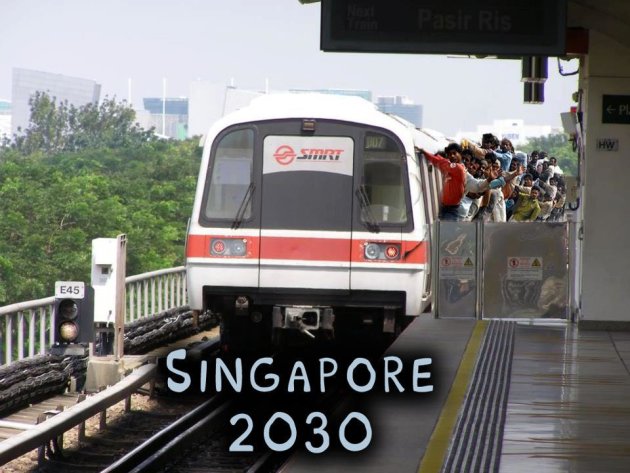
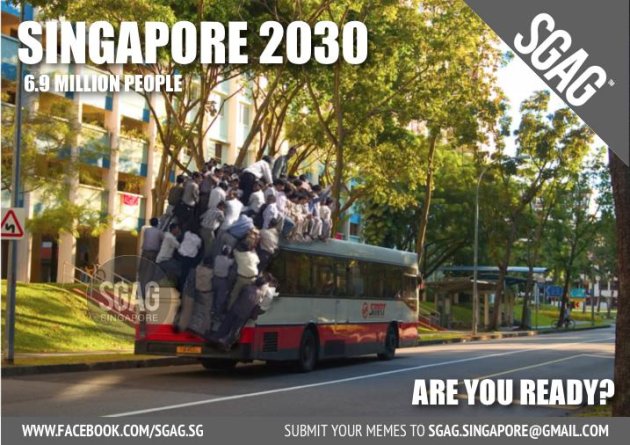
Other Singaporeans have expressed their frustration with humour, sharing memes made by popular satire website 9GAG Singapore.

(Photo courtesy of SGAG)

(Photo courtesy of SGAG)

The National Bus Drivers Conversation – Striking the Right Balance

30 January 2013 Posted by: Juris No Comment
by Eric Hu
Singapore Law Review

The recent saga between SMRT and its Chinese bus drivers has drawn much attention locally[1] and internationally[2]. The bus drivers went on a strike on Nov 26 and 27 over lower wages compared to their Malaysian counterparts. The strike conducted over 2 days has disrupted “public transport services [island-wide] and Singapore’s industrial harmony.”[3]

This article focuses on the Criminal Law (Temporary Provisions) Act[4] [CLTPA]. The strike by the drivers was illegal because it has contravened Section 6 of the CLTPA. According to Section 6(2), workmen in essential services[5], including public transport, shall not go on strike unless they have given their employer a notice of intention “at least 14 days before striking”.

One may wonder why the limit of a notice of 14 days is imposed and whether it defeats the purpose of a strike, which is to compel the management to reach a conclusion swiftly. Tracing back to its legislative history, it existed originally in 1955, under Section 23 of the Criminal Law (Temporary Provisions) Ordinance[6]. According to Chief Secretary W.A.C Goode, the purpose of giving notice was to allow for “emergency arrangements [to] be made to ensure a minimum service necessary for the well-being of the public.”[7] Indeed, the “over-riding interests” of the general public seems to be the predominant consideration.

However, public transport was not initially included in the list of “essential services” in 1955. The Chief Secretary, W.A.C Goode explained while a “sudden stoppage of public transport … must cause very grave inconvenience and hardship to the community, but nevertheless, we reached the conclusion that we should not regard it as being vitally necessary to the health and life of the community.”[8] It was only included twelve years later[9], where the Parliamentary Secretary to the Minister for Labour, Mr Sia Kah Hui, stated that there should be “no qualms about the inclusion of public bus transport” as it was “very essential to the thousands of school children and officer workers who depend on it.”[10]

One may therefore question the distinction between the three services and the rest of essential services (which are allowed but requires 14 days notice). A plausible explanation is offered by the Parliamentary Secretary to the Minister for Labour, Mr Sia Kah Hui, “water, electricity and gas are vital necessities of life, and Government has to ensure that these basic necessities are not denied to the people. The prohibition of strikes in these services is to ensure that these vital services are available at all times.”[11]

However, this then begs the question: why not extend the ban to all essential services instead of the mentioned three? If the Government’s primary intent is to resolve disputes through unions and arbitrations, and if there is an overriding need to prevent such unnecessary disruptions, it may be logical to extend the ban to all essential services.

Indeed, the harsh stance[12] of repatriating 29 drivers and charging 5 drivers[13] under Section 9(1) of CLTPA suggests a deterrent effect to future strikes. In that case, it might be more consistent to ban all strikes in essential services and have employees seek remedy through their unions or arbitrations, rather than vaguely leaving the possibility of a legal strike open, but requiring a high threshold of 2 weeks’ notice.

This may seem unlikely for Singapore to do so in the near future. When the ban on strikes was imposed on water, gas and electricity services, it raised several objections from trade unions and Members of Parliament.[14] It appears that the present situation is a compromise, leaving open the possibility of a lawful strike as a last resort, yet safeguarding the national interest. There remains a need for the Government to strike a balance between public interest and interests of the workers. It seems a leeway must still remain to allow for a legal strike in the failure of talks, to compel the management to address the dispute in a swift manner, in the event “conciliation proceedings … drag on for a considerable time.”

In conclusion, the incongruity of the 14 days’ notice deserves a relook. In time to come, it may well be consistent with public policy to extend the ban to strikes in all essential services. However, the foremost priority of the Government must be to strengthen the arbitration channels available to the employees. Only then can we move towards the ambitious aim of “[taking] the place of strikes as a means of bringing the workers’ grievances to the attention of [the] authorities.”[15] Certainly, the interests of the workers have to be adequately protected especially in large corporations, if such a blanket ban is to be considered.

Sustainable population for a dynamic Singapore

The Government yesterday released a White Paper on population issues, focusing on the need to build a sustainable population for a dynamic Singapore and projecting a population of 6.5 million to 6.9 million by 2030. The executive summary is below. The full text is available at www.population.sg
Straits Times, Published on Jan 30, 2013 
-- ST ILLUSTRATION: MANNY FRANCISCO
SINGAPORE will experience an unprecedented age shift between now and 2030. Over 900,000 baby boomers, more than a quarter of the current citizen population, will enter their silver years.

From 2020 onwards, the number of working-age citizens will decline as older Singaporeans retiring outnumber younger ones starting work. At our current low birth rate, our citizen population will age rapidly and also start declining from 2025 if we do not take in any new immigrants.

This White Paper sets out the key considerations and road map for Singapore's population policies to address this demographic challenge. It outlines the Government's policies to maintain a strong Singaporean core in the population, regulate how many new Singapore citizens and permanent residents (PRs) we take in, create jobs and opportunities for Singaporeans, build a high-quality living environment, as well as strengthen our identity and society.

Three pillars
A SUSTAINABLE population for Singapore rests on three key pillars.

First, Singaporeans form the core of our society and the heart of our nation. To be a strong and cohesive society, we must have a strong Singaporean core.

Strong families are the bedrock of our society, through which we pass on our values and sense of belonging from one generation to the next. We may have diverse geographical and ethnic backgrounds, but we are all Singaporean because we share certain key values and aspirations, including meritocracy, a fair and just society, and respect for one another's culture within a broad common space where all interact and bond.

Second, our population and workforce must support a dynamic economy that can steadily create good jobs and opportunities to meet Singaporeans' hopes and aspirations. Many Asian cities are modernising rapidly, and catching up on us. Singapore must continue to develop and upgrade to remain a key node in the network of global cities, a vibrant place where jobs and opportunities are created. A dynamic economy will provide us with more resources and room to pursue inclusive growth strategies to benefit all segments of our society.

Third, we must continue to keep Singapore a good home. Our city must continue to be well-managed, well-planned and well-developed. We must meet the infrastructure needs of a changing population and economy in a timely and efficient way, while preserving and enhancing a green environment, so that Singapore can be a unique, bustling "City in a Garden".

A strong Singaporean core
IN 2011, our total fertility rate (TFR) was 1.20. It has been below the replacement rate of 2.1 for more than three decades. Low and falling TFR is not unique to Singapore. Many developed Western countries and East Asian societies such as Hong Kong, Japan and Taiwan suffer the same problem.
To help Singaporeans achieve their dreams to marry and have children, we introduced a Marriage and Parenthood Package in 2001, and enhanced it in 2004 and 2008. We are further enhancing the package this year to (a) enable couples to get housing faster and more easily, so that they can marry and start families earlier; (b) provide support for conception and delivery costs; (c) further defray child-raising costs, including health-care costs; (d) enhance work-life measures to help working couples balance work and family commitments; (e) signal to fathers to play a bigger role through paternity and shared parental leave.

We will continue to welcome immigrants who can contribute to Singapore, share our values and integrate into our society. More Singaporeans are marrying non-Singaporeans.

About 40 per cent of Singaporean marriages each year are between a Singaporean and a non-Singaporean - some 9,000 in 2011 alone.

We do not expect our TFR to improve to the replacement rate of 2.1 in the short term. Taking in younger immigrants will help us top up the smaller cohorts of younger Singaporeans and balance the ageing of our citizen population. To stop our citizen population from shrinking, we will take in between 15,000 and 25,000 new citizens each year. We will review this immigration rate from time to time, depending on the quality of applicants, our birth rates, and our changing needs.

Permanent residence is an intermediate status through which foreigners take up citizenship. It is meant for those who have a long-term stake in Singapore and intend to sink roots here. We have tightened up significantly on the number of PRs granted each year. We have come down from a high of 79,000 new PRs in 2008 to about 30,000 each year currently. We plan to maintain the current pace. This will keep a stable PR population of between 0.5 million and 0.6 million, and ensure a pool of suitable potential citizens.

We will continue to encourage and help new citizens integrate into our society. We would like them to adapt to our way of life, while enriching the diverse experiences, skills and capabilities in our society.
With this controlled immigration rate, the citizen population is projected to be between 3.6 million and 3.8 million by 2030. Together with the PR population of 0.5 million to 0.6 million, this gives a resident population (comprising citizens and PRs) of between 4.2 million and 4.4 million in 2030, depending on birth rates, immigration and life expectancy.

Creating good opportunities for S'poreans
THE Singaporean workforce is becoming progressively better qualified as better educated young Singaporeans start work, and existing workers upgrade themselves through continuing education and training. We anticipate a significant upgrading of the Singaporean workforce towards professional, managerial, executive and technical (PMET) jobs. By 2030, the number of Singaporeans in PMET jobs is expected to rise by nearly 50 per cent to about 1.25 million compared with 850,000 today, while the number in non-PMET jobs is expected to fall by over 20 per cent to 650,000, compared with 850,000 today. Overall, two-thirds of Singaporeans will hold PMET jobs in 2030, compared with about half today.

We will continue to provide opportunities to non-PMET Singaporeans and help them to upgrade and upskill, as well as ensure that they are treated fairly and their pay recognises the increases in their contribution.

To create good jobs and opportunities for Singaporeans, we need a dynamic economy and businesses that produce goods and services not just for Singapore, but for the region and the world. Our economy must stay ahead of other Asian cities so that we can provide them with the high-end goods and services that they need but are not yet able to produce themselves. Our businesses will need a workforce with the full range of skills, backgrounds and experiences that can kick-start high-value-added emerging sectors, and understand regional and international markets. This requires a complementary workforce of Singaporeans and foreigners.

Foreign workers can provide skills and expertise, as well as market knowledge and access, to enable Singapore-based companies to create new products and penetrate new markets to serve the region and beyond.

Foreign workers help to create the right balance of skilled and less-skilled workers in the overall workforce. As Singaporeans upgrade themselves into higher-skilled jobs, more of the lower-skilled jobs will have to be done by foreigners.

Foreign workers also provide health-care, elder-care and domestic services to support our ageing population and working families. They build infrastructure and housing, and do conservancy and maintenance work. They thus enable Singaporeans to enjoy good social and municipal services at a moderate cost, contributing to our quality of life.

Foreign workers enable businesses to expand quickly and flexibly during economic booms. They also buffer Singaporean workers from job losses during downturns.

We thus continue to need a significant number of foreign workers to complement the Singaporean core in the workforce.

However, we cannot allow in an unlimited number of foreign workers. We do not want to be overwhelmed by more foreign workers than we can absorb, or to expand our total population beyond what our island is able to accommodate. Too many foreign workers will also depress wages and reduce the incentive for firms to upgrade workers and raise productivity.

For the rest of this decade, as the growth of our Singaporean workforce slows, our total workforce growth will also slow to about 1 per cent to 2 per cent per year, half of the 3.3 per cent per year over the past 30 years.

Beyond 2020, workforce growth will slow down further to about 1 per cent per year as the population ages and the Singaporean workforce starts to plateau.

We must thus rely less on foreign labour, use our resources better and redouble efforts to improve productivity. That is the only sustainable way to grow the economy and raise real wages. However, over time, as our economy matures and undergoes major demographic shifts, sustaining high productivity growth will also become harder.

Up to 2020, if we can achieve 2 per cent to 3 per cent productivity growth per year (which is an ambitious stretch target) and maintain overall workforce growth at 1 per cent to 2 per cent, then we can get 3 per cent to 5 per cent gross domestic product (GDP) growth on average. But over the whole period, GDP growth is more likely to average 3 per cent to 4 per cent, though we may exceed that in good years.

Beyond 2020, Singapore will continue to enjoy good prospects so long as we remain competitive and are able to plug into Asia's growth. We may see GDP growth of between 2 per cent and 3 per cent per year from 2020 to 2030. However, actual economic growth will depend on many factors: our external environment, our productivity and workforce growth, how dynamic and creative Singaporeans are, and how well we work together, compared with people in other cities.

High-quality living environment
WE WANT Singapore to continue to be one of the best places to live in the world - a city for all age groups and a country we are proud to call home.

We will invest in our infrastructure and create high-quality urban spaces, offering convenient access to amenities, transport nodes and services. Our rail network will expand by about 100km to a total length of 280km by 2021. We will build more public housing, hospitals and care facilities. With new parks and park connectors, Singaporeans will continue to enjoy accessible and interconnected green spaces all around Singapore.

We will continue to explore new technology and innovative solutions to expand and optimise our land use. The National Research Foundation has allocated $135 million for research and development into land and liveability, focusing on creating new space cost effectively and optimising the use of space.

By planning our infrastructure developments well in advance, and implementing them in a timely and effective way, we can overcome our current strains and congestion, and accommodate a larger population.

Population trajectories
THE road map in this White Paper puts us on possible population trajectories to meet the present and future needs of Singapore and Singaporeans.

Singapore's total population of residents and non-residents in 2020 is projected to be between 5.8 million and six million, depending on our fertility trends, life expectancy, as well as our social and economic needs. The resident population (comprising citizens and PRs) is projected to be four million to 4.1 million, of which citizens alone will make up 3.5 million to 3.6 million.

By 2030, Singapore's total population could range between 6.5 million and 6.9 million. There is a wider band of uncertainty, and the actual population will again depend on factors such as our fertility trends and life expectancy, the global and regional environment, our economic structure and social needs.

The resident population (comprising citizens and PRs) is projected to be 4.2 million to 4.4 million, of which citizens alone will make up 3.6 million to 3.8 million.

No simple solutions
OUR population challenges are complex and multi-faceted, and have far-reaching effects on our current and future generations. There are no simple solutions.

We need to find a balance. If we do too little to address the demographic challenge, we risk becoming a steadily greying society, losing vitality and verve, with our young people leaving for opportunities elsewhere. But if we take in too many immigrants and foreign workers, we will weaken our national identity and sense of belonging, and feel crowded out of our own home.

This White Paper aims for a judicious balance to achieve our goal of a sustainable population for a dynamic Singapore.

We must plan well ahead in order to build the best home for Singaporeans, both current and future. A home where we care for one another, and feel a sense of belonging and pride. A home for Singaporeans to bring up families and nurture children. A home where the old live their silver years with grace and dignity, and the young have exciting opportunities and bright futures.